Whenever someone hears the term 4×4 post, he or she will automatically think that the piece of wood would have exact dimensions of 4 inches by 4 inches. In reality, this is not very true. Dimensions of lumber are an interesting combination of traditional practices, lumber milling procedures, and industry standards.
The difference between the nominal and actual (real) size is an important factor that every builder, DIY lover, and homeowner must realize prior to initiating a project. The real size of the 4×4 post is 3½ inches by 3½ inches. This change is due to the planning and drying process, which occurs after the initial milling. This small change plays a significant role in structural calculations, materials, and overall design accuracy.
Being aware of the actual size of lumber is more than merely obtaining the correct measurements; it can significantly impact how your structure will hold up, the type of hardware you use, and even your budget. This guide is going to take an in-depth look at the actual 4×4 post size, why their names don’t match their measurements, and what trends everyone in the industry follows to size lumber.
Actual vs Nominal Size of 4×4 Lumbar Post
Whenever you order a 4×4 post, the builders will refer to the nominal size, which is the rough-cut dimension before the finishing is done. The actual size is considered to be 3.5 x 3.5 inches for lumber classified as softwoods, which is mostly used for framing and structural applications.
The nominal dimension was, originally, the actual size when the log was first cut into wood. Yet due to shrinkage during drying and planing (the process that makes the wood smooth), the dimensions are reduced. The origin of 4×4 remains in use, although the final product is smaller.
Standardized industry sizes are useful to maintain consistency across manufacturers, although a nominal industry definition and a representative industry size may be confusing for beginners. Understanding these sizes is critical when working with joints, designing structural members, or installing hardware brackets and connections.
Key Facts:
Nominal Size: the name of the rough-sawn piece before the drying and planing.
Actual size: the real, finished size (processed).
| Nominal Size | Actual Size (inches) | Actual Size (mm) |
| 4×4 | 3.5 x 3.5 | 88.9 x 88.9 |
How to Measure Lumber Accurately For Any Frame
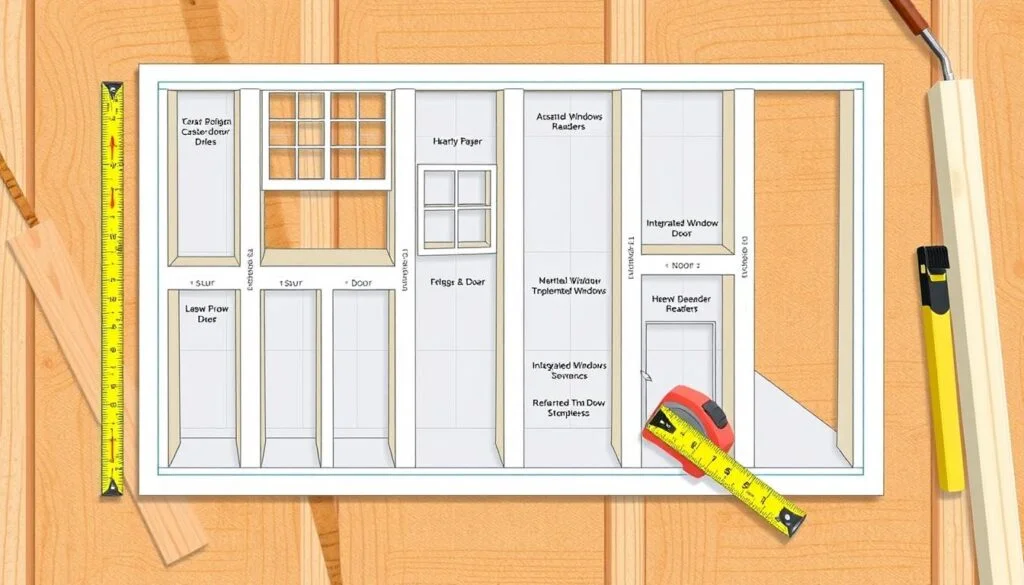
Calculating the size of lumber is not about taking out a ruler for a board and measuring the lumber. To cut up lumber without error, you have to know the nominal size as well as the real one. You will need to measure width, thickness, and length in inches or feet when working with posts and beams, at least before investing in your project.
A framing calculator also allows rapid conversions and an understanding of the correct amount of lumber required to complete a particular task, so that expensive mistakes and waste are avoided.
A mistake may cause a great delay or extra expenditure. It is the reason why there must be a perfect plan to estimate everything about lumber requirements on your projects without fault. That is where we can assist you! The procedure to know about the required lumber dimensions and the needs of any frame is as follows:
Step 1: Begin with Wall Dimensions
Sketch or measure the correct length/height. This will comprise window and door openings. Measure the on-center stud spacing (usually 16 inches will work), which will allow you to determine how many studs and plates to use.
Step 2. Nominal Sizes Conversion
To compute board footage, use nominal dimensions. Although a 2 x 4 is 1.5 x 3.5 after milling, most framing drawings, price lists, and hardware are still assumed in nominal dimensions.
Step 3: Apply the Board Foot Formula to calculate the Volume and Cost
Material estimation must involve the calculation of board feet for figuring the board feet in a log. The following formula is used for it.
Board Feet = T (in) × W (in) × L (ft) ÷ 12
If the pieces are measured in inches, use the following formula:
Board Feet = T (in) × W (in) × L (in) ÷ 144
Step 4: Measure the Required Dimensions for Framing Elements
By this rule, you may count studs:
Stud count = (Wall length (in) /Stud spacing (in) ) + 1
The top and bottom plates are normally layered twice. Therefore, just multiply the wall width by the number of layers you need and add 5-10 percent of wastage.
Step 5: Add 10 to 15% Extra for Wastes or Mistakes
Buy a little more than you need. The reason is that errors, poor cuts, or defective boards occur more frequently than you would expect. Framing is not math, but it is the reality.
Step 6: Use Framing Calculators
Calculate thickness, width, and length using online calculators or Excel spreadsheets. These will automatically provide you with board-foot totals, estimated cost, and linear footage. Simply be sure that you are inputting nominal dimensions.
What’s the load-bearing Capacity of 4×4 Lumbar Posts?
The capacity of the 4×4 posts is a very important aspect of the stability and safety of any building or structure. The weight that it can support varies with many things, such as species of wood, the grade of wood for building furniture, the moisture level of the wood, as well as the height into which the post is drilled.
An average pressure-treated 4 x 4 lumbar post made of Douglas Fir or Southern Yellow Pine post would have ample strength to allow 4,000-6,000 pounds of vertical pressure as long as loading is in a short column arrangement with little buckling.
But as the post gets longer, it can very rapidly become incapable of resisting loads due to the increased slenderness/potential of bending. In an example, an 8-foot, 4x4post will not be able to sustain as much as a 4-foot post under the same conditions.
Factors Impacting the Load Capacity of the Lumbar:
- Species of Wood: Massive woods such as oak or Douglas Fir handle more load as compared to cedar or pine.
- Post length: The longer the posts, the higher the chances of buckling which weakens the posts.
- Load Type: axial loads (straight down) are different types compared to lateral loads which exert side pressure.
- Environment Conditions: Moisture can turn the posts weak with time in case they are not treated.
Pro Tip
When dealing with structural projects such as a deck or pergola, make sure you consult the proper building codes and engineering tables to find out exactly how much weight is needed. To be on the safe side, oversizing is normally better than undersizing.
Applications of 4×4 Lumbar Post
The 4 x 4 posts are essential in construction because of the strength, flexibility, and structural support they can offer. The posts can be utilized in residential, commercial, and outdoor applications since they are sturdy and capable of supporting large weight applications. Some of the most prevalent uses of 4×4 posts in the construction industry have been discussed below.
1. Deck and Porch Support
Decks and porches are one of the most popular uses of 4×4 posts. The posts are good as vertical supports which support the weight of the deck structure to the foundation. The 4x 4 posts are efficient in framing deck railing and making the whole platform stable since they are strong and durable. They also offer a safe mounting point of the guardrails that offer safety in raised outdoor areas.
2. Fence Posts
The 4×4 posts are very common in making fences around residential, agricultural, and commercial fences. They provide the main support of fence panels, and make sure that fence will be straight and stable despite the outer effects, like gusts of powerful wind. 4 x 4 posts are able to provide the rigidity and longevity required to stand up to outdoor conditions whether you are building a decorative or privacy fence in a wood environment or in the garden.
3. Pergolas and Gazebos
The other popular usage is where it is used in constructing pergolas and gazebos. Outdoor buildings must have strong vertical columns to support the weight of the beams, rafters, and sometimes even plants climbing them or other roofing. The 4×4 posts are ideal in these situations since they are strong enough to take the weight yet ensure that the open-air architectures are still beautiful.
4. Sign Posts/Mailbox
Due to their size and high stability, 4×4 posts are commonly used to install mailboxes and signs. In the case of mailboxes, the posts are submerged easily in the ground using concrete to avoid leaning after some time, or toppling over. In the same manner, in case of signage, we can use 4×4 posts since exposure to outdoor weather will not result in severe deterioration of these posts making them a feasible option to use in residence or commercial signage.
5. Temporary Supports and Structural Framing
The 4×4 can at times be used temporarily as braces or temporary support in construction sites when framing is being carried out. They are able to support beams or trusses so that permanent connections can be made. They are also flexible and can be easily cut to suit the desired lengths needed in the framing of doorways, windows and other house structures in residential work.
Strength and Versatility of a 1×12 Lumber Post
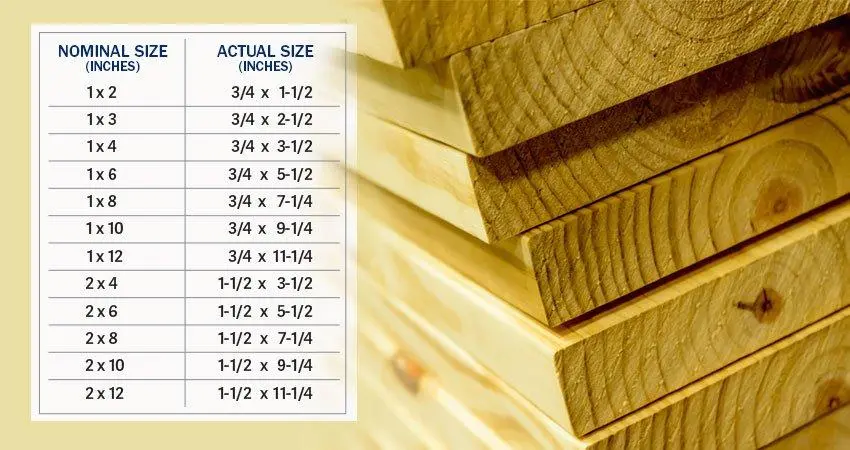
In case you are given a 1×12 board, it may look like an entire slab that’s one inch thick. Nevertheless, this is not true! The 1×12 lumber actual size, however, is only 0.75 inch thick in reality. Meanwhile, its width measures about 11.25 inches.
Manufacturers have the rough boards cut out in 1×12 inches. At that point, the process of drying begins. They are then planed down after drying, with the thickness reducing to 0.75 inch. The width also becomes narrow to about 11.25 inches
The majority of large-format hardware stores and lumber yards give values of the true dimensions of 1 x 12 as: 0.75-in. (19.05 mm) x 11.25 inch (285.76 mm). That is the size you are supposed to get. Therefore, do not cut bench tops in order to get a full inch.
Here’s a summary chart showing the most commonly sold 1-inch nominal boards:
| Nominal Size | Actual Size (inches) |
| 1×4 | ¾ × 3½ |
| 1×6 | ¾ × 5½ |
| 1×8 | ¾ × 7¼ |
| 1×10 | ¾ × 9¼ |
| 1×12 | ¾ × 11¼ |
Actual dimensions of a 2×6 Lumbar Post
When you purchase a 2×6 you do not get two inches by six inches. The completed board is about 1 1/2 inches thick 5 1/2 inches wide. This is a result of drying and planning processes and is normal throughout softwood framing lumber.
Nominal 2×6 boards start as rough-sawn logs which qualify to be called 2-by early in the production line. But the lumber is dried in kiln. It is smoothed on the four sides later on to eliminate approximately 1/2 an inch in thickness and width. That little bit of loss counts a great deal. It is useful when framing the walls or putting joists to precise spacings.
It is necessary to use the right figures in your takeoffs, material lists, or framing calculators. By assuming that a 2 x 6 actual size is six inches, you will run into excess with a noticeable amount of material or you can wind up with misalignment lining up of the studs and supports.
Sizing Standards in Softwood vs. Hardwood
Softwood lumber, is mostly used in construction projects and are standardized according to size, whereas hard woods (usually furniture wood) follow a different grading system and are typically available in quarters of an inches thickness.
The most common 4×4 post is the soft wood pine, spruce and firas it’s the best wood for woodworking on different projects. There is mostly a use of soft wood in framing and in deck construction. Learning the standards of each kind makes sure that you purchase the accurate dimensions of your projec
| Wood Type | Nominal 4×4 | Actual Size |
| Softwood | 4×4 | 3.5″ x 3.5″ |
| Hardwood | 4×4 | Varies (often full dimension if custom milled) |
Pressure Treated Lumber Posts vs Untreated Lumbar posts
In the purchase of a 4×4, there are usually the options of pressure-treated lumber and untreated lumber. The 4×4 posts that have been pressure treated are treated with preservatives that ensure they are resistant to rot, termites and fungal decay hence suited to outdoor usage.
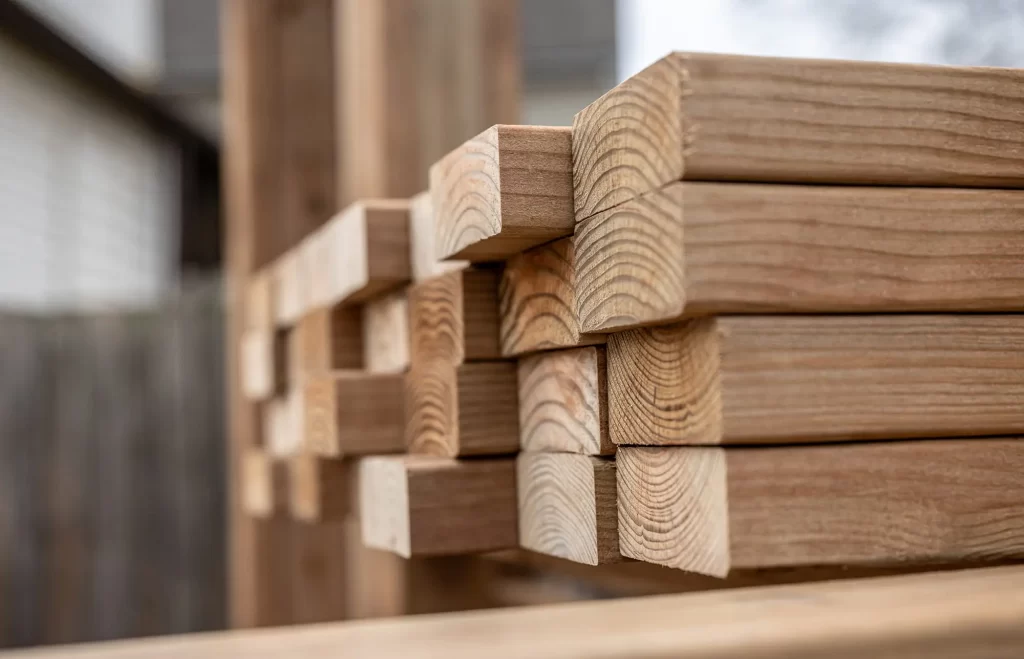
Nevertheless, in very small proportions size, weight and moisture are modifiable with treatment. When a 4×4 has just been treated it could even be a little over 3.5 inches before it finally dries up
| Feature | Pressure-Treated 4×4 | Untreated 4×4 |
| Longevity | 15–40 years outdoors | 5–15 years outdoors |
| Resistance | Rot & pests | None |
| Actual Size | ~3.5″ x 3.5″ | ~3.5″ x 3.5″ |
Conclusion
The real size of a 4 x 4 post in construction in USA is 3 1/2 by 3 1/2 inches, which is a highly sensitive dimension and it affects all features of house and low-commercial construction design. Whether it is building fences and decks or structure framing and outdoor architectural construction, knowing actual dimensions enables those areas to fit, be able to support the load and meet code.
When working on constructing buildings, these dimensions have to be put into considerations by builders, designers, and home owners as part of the planning procedure of purchasing and installation of structures for durabilit and structural integrity.
Frequently Asked Questions
How are 4X4 Posts normally used in the construction field?
The 4×4 posts are also common in holding structural supports in housing and commercial construction. They form a support point in constructing decks, porches, fence and pergolas and even a small garden shed offering strength and support to the vertical and horizontal loads.
What makes the 4×4 posts ideal in building decks?
4 x 4 posts will provide the right proportion in size and strength that is ideal to hold the weight of decks and any structures that may be attached to it. Their toughness makes them suitable in residential decks; however, they are easier to use as opposed to larger beams making the job simpler to install all the same not compromising the stability.
Do 4×4 posts work as load bearing walls?
Larger beams have more strength than 4 x 4 posts and serve as a major source of support to the main load-bearing walls in most cases. They are, however, frequently combined with framing as intermediate supports or partition wall systems in which heavy loads are of no concern.
What are 4×4 posts made of?
Outdoor durability is created by using pressure treated lumber, cedar, or redwood, typically. On others, there are those projects that have greater weather resistant requirements or maintenance requirements through the use of composite or metal 4X4 posts.