The foundation is the lowest part of a structure, which is also referred to as the core structure upon which your entire building rests. The foundation is very important as it ensures that your structure supports the weight, the weight is distributed perfectly, and your building stays resistant to disasters such as earthquakes, wind, water, etc. As it holds significance, constructing a strong foundation is a key part of a construction project.
No matter how big or large your construction project, from small residential sectors to large-scale industrial projects, your foundation tells how long your structure will stand. But how much does a foundation cost? Understanding the cost of building a foundation can help you with not only budgeting but also with conducting successful construction.
In this blog, we’ll discuss the cost of constructing a foundation, along with all the factors impacting the costs in detail.
Average Cost of Foundation Per Square Foot
The average cost of a foundation ranges from around $3 to more than $50 per square foot; this is the general range across various types. If you are looking for a standard foundation of about 2000 to 2400 sq feet, the cost ranges from $9,391 to $28,000, and more, depending on the type of foundation. For larger homes or foundations with complex designs, the cost can even exceed $100,000.
The cost can also range depending upon factors such as foundation is used for what type of project. As an illustration, a typical concrete-slab-grade foundation, priced at about 4 to 7 per square foot, will cost you about 6 to 14 when a poured concrete slab is used. So, yes, it depends upon various factors.
Cost By Types Of Foundation In 2025
There are multiple types of foundations. From a broader perspective, the foundations are divided into two categories: shallow and deep foundations, but we are gonna discuss all of them. Each type of foundation is used for a different and unique purpose, and its requirements and costs also vary. Now, we are going to discuss all the types of foundation and their costs in detail.
- Types of Shallow Foundation: Moving on to the shallow foundation, these are structural bases that spread or transfer the building’s load to soil layers, very near the surface of the earth, instead of rock layers or deep soil. It is mostly at depths of less than 3 meters. These shallow foundations are very useful when it comes to structures that are light or heavy at a moderate level on areas where the surface of the soil is strong, stable, and sturdy.
- Concrete Slab Foundation: A concrete-slab foundation is one of the most commonly used types. It is a single, large, thick, flat concrete pad poured onto the ground. This helps create a structural base, flooring, and a flat surface that can support the entire building. In such foundations, vapor barriers are mostly installed to avoid damage caused by moisture. If you’re considering slab options for outdoor living spaces, you might also compare them with composite decking costs in 2025.
They are widely used for construction projects such as residential homes, garages, and small commercial buildings, due to their durability and simplicity.
Pros:
1. It has lower material and labor costs.
2. It can be installed quickly without any difficulties.
3. Requires less maintenance compared to other foundation types, such as crawl spaces or basements.
Cons:
1. Plumbing and electrical system lines may go through these slabs, which makes repair costly.
2. It also doesn’t allow basement or underfloor storage area options.
3. It is more suitable for warm weather, making it vulnerable to cracks in cold weather if not insulated properly.
General Cost: A Concrete slab foundation has an average cost of between 4 and 8 dollars per square foot. However, when you are in need of extra features such as insulation, radiant heating, etc, then the cost may go up by approximately 10 to 16 dollars per square foot.
- Crawl Space Foundation: It is one of the types of elevated home foundations that include shallow, unfinished space, and are about 1 to 4 feet high between the soil and the building floor. This is mostly used for house plumbing, electrical wiring, and HVAC systems, as it is easy to maintain. Unlike a concrete slab foundation, it is used in regions that offer a moderate climate.
I would suggest going with this if you are looking for sloped lots where you need some ground clearance, but a full basement is not necessary.
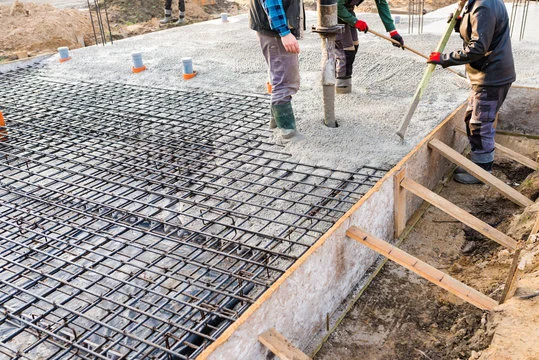
Pros:
1. It offers much better ventilation and moisture control.
2. It is better for sloped areas as it adapts perfectly to uneven terrains.
3. It offers easier utility access, making tasks such as plumbing, wiring, and ductwork easier to maintain.
Cons:
1. If the crawl space is not ventilated properly, it can attract mold and mildew.
2. If the insulation is not done properly, you can face heat loss, and lower energy efficiency is expected.
3. It also has issues with pests. So, rodents, termites, insects, and other pests can infest your foundation if your sealing is not properly sealed, cleaned, and maintained.
General Cost: The average cost of a Crawl space foundation will be between 6-18 dollars per square foot. It is also possible to change the price depending on the necessity to use insulation, vapor barriers, waterproofing, pest-control options, etc.
- Basement Foundation: In 2023, the construction of single-family homes in the US was approximately 283,000, and had basement foundations. A basement foundation is one of the most expensive types of foundation, mostly because a lot of material is required for its construction. It involves excavating below ground level, creating some space. The typical height of the usable space is about 6 to 8 feet, or more, as it should extend below the frost line. Unlike other foundations, it requires more concrete steel and other tasks such as waterproofing for this depth.
It is a much more suitable and preferable option for regions that are cold and high, which also helps it avoid significant damage.
Pros:
1. It offers more usable space for storage, sheltering, and other living purposes.
2. It is considered stronger and far more durable than other types, such as shallow foundations.
3. It can provide shelter from storms, and if it is well-built and reinforced, other extreme weather events also fall within its protection.
Cons:
1. It also takes significant time for construction as more resources and tasks are involved.
2. Flooding, moisture intrusions, and water seepage can lead to mold and mildew issues
3. It is not widely considered an affordable option because tasks such as excavation, finishing, waterproofing, and more increase the cost.
General Cost: The expenses and costs for constructing a base foundation per square foot are about $20 to $47. If we are going any higher, it reaches from $50 to $100, or more per sq ft, especially if you are looking for a fully finished basement.
- Pad (Isolated) Footing: A pad footing, also known as an isolated footing, is one of the most common type that comes under shallow foundation. It includes an individual reinforced concrete block or pad, which is placed underneath columns to allow the load to be distributed safely to your soil. The concrete pad can be square, rectangular, or circular.
So, it uses an isolated concrete pad that supports an individual column, post, or pillar, thus giving it the name isolated footing foundation.
Due to such properties, it is much more suitable if most of your buildings or structures’ load comes directly through individual columns, piers, or posts instead of continuous walls or slabs. So, when the depth of your foundation is not the key factor in your project, it is a good choice in cases of stable ground and moderate soil conditions.
Pros:
1. As less material, labor, and excavation are required for this foundation, it is more affordable.
2. Its simple design also helps boost the construction process, making the installation simple and quick.
3. It’s not only flexible in shape, providing 3 options: rectangular, circular, and square forms, but also works well with buildings that have openly distributed, lighter loads.
Cons:
1. One of the main drawbacks of this foundation is that it doesn’t go very well with soils that have low bearing capacity.
2. If your soil conditions depend on different columns, then your isolated pads might settle unevenly, causing your building or structure to tilt, sink, or distort.
3. It is also not the best choice for structures that are exceptionally tall or heavily loaded.
General Cost: The average cost for a pad or an isolated concrete slab foundation in the US, 2025, is anywhere around $4 to $14 per square foot. But this is for standard concrete and can depend upon thickness and rebar or fiber reinforcements. The highest it can reach is $30 per square foot.
- Strip Footing: A study shows that strip footings are more cost-effective for walls that have a load below 200 kN/m. This condition is met by more than 65% of small Masonry Work Cost Per Hour buildings worldwide. A strip footing is a type of shallow foundation, which is also known as a strip foundation or wall footing. It concludes a continuous, linear strip of reinforced or plain concrete which is laid beneath load-bearing walls. It provides a large and stable base for your load-bearing walls or closely spaced columns.
Any project with low-bearing walls, such as small commercial structures, garden or boundary walls with load-bearing capacity, low-to-medium rise residential buildings, or any small to light structures, will work out best with a strip footing.
Pros:
1. It has a very simple construction process that also requires less digging, excavation, and framework, compared to other foundation types that are complex.
2. The width of the strip helps spread the wall load to the soil without any damage, making sure that the load is distributed uniformly.
3. If you are looking for a foundation that is quick to construct, you can go with this.
Cons:
1. It is not a suitable choice for projects demanding heavy or concentrated loads.
2. If you have very weak or highly compressible soils as it is unable to adequately transfer the load of the structure to a stable foundation layer.
3. They are not only a bad choice for unstable or poor ground conditions, but also not the best for situations such as flooding or sloping terrain.
General Cost: In 2025, the cost for a strip footing foundation can range from $3 to $10 per square foot. For a linear foot, the price can range from $5 to $18, depending upon factors such as reinforcement, soil-bearing strength, and excavation depth.
- Stem Wall Foundation: A stem wall foundation is another type of foundation used in many construction projects. It includes using short vertical walls, called stems. These are built at the top of a poured concrete footing, which helps hold the structure slightly above the ground. The main purpose of it is to support the walls, floor, and the structure that is above the ground. Stem walls are mostly made using poured concrete or masonry blocks, with reinforced bars.
This foundation is applied to residential and commercial property when the site is subject to problems like flooding, unstable soil or the need to provide a crawl space.
Pros:
1.It is beneficial for residential buildings as it helps you avoid flood risk and also keeps framing and finishes dry.
2. Like others, it also provides a crawl space, making MEP, HVAC, ductwork, and other systems easy to maintain and access.
3. It is much durable and offers a very stable resistance to soil movement.
Cons:
1. It requires more material, labor, and a construction process that also takes time and effort.
2. You would require proper ventilation and moisture control systems to avoid mold or pest infestations.
3. Reinforcement and maintenance are required; otherwise, cracks might appear.
General Cost: A stem wall foundation will cost you between $6 and $18 per square foot. For an entire residential building, the total cost of the foundation typically ranges from $7000 to $21,000, and more.
- Raft (Mat) Foundation: Do you know that a Raft foundation, also known as a mat foundation, covers more than 70% of your ground area beneath the structure? It is a single, thick, and large concrete slab that extends under your entire building. These concrete slabs are reinforced with steel and span the entire footprint of your structure. You can say that it works almost like a raft on water. The load is distributed uniformly and supported across a wider area of the subsoil. It is very useful and effective if you are working on a weak or compressible soil.
Going with this option suits you more if your project is on a moderately weak, unstable foil, or if your structure comes under those with low bearing capacity, high water tables. It is mostly used in residential buildings and is even utilized in industry-level complexes, warehouses, and high-rise structures.
Pros:
1. As it uniformly distributes load, it helps structures and settlements reduce stress by spreading the load.
2. It is a more cost-effective and affordable option compared to various isolated footings and some deep foundations.
3. The construction for it is quick, and it is also a very good choice for projects requiring waterproofing.
Cons:
1. When the soil is very weak, expansive clay soil, or has a very low bearing capacity, such as peat, organic soils, loose fill, or marshy ground, then it is ineffective.
2. It is more prone to damage at its edges, and the risk of cracking is present if you don’t add proper protection.
3. Although it is cheap compared to many deep foundations, its cost can still increase due to extensive concrete and steel requirements.
General Cost: The cost for raft foundations depends upon factors such as material, labor, and project size. Generally, the cost of a raft foundation per square foot ranges from $6 to $12+. If you are looking for rebar reinforcement, the extra price for it ranges from $1.40 to $4.00. For some projects, raft foundation cost can also reach $20 to $40 per square foot, depending upon size, thickness, and material.
- Combined Footing: It is designed to carry out and support two or more columns that are closely spaced on a large, single concrete base. It helps distribute the weight and load over a larger soil area. In simple words, it is a long platform made out of a material such as concrete that helps support more than one column or wall.
Another type of shallow foundation is used when individual column footings are required, when the column is near a property line, when your soil has low bearing capacity, or if your structure is in a tight urban space.
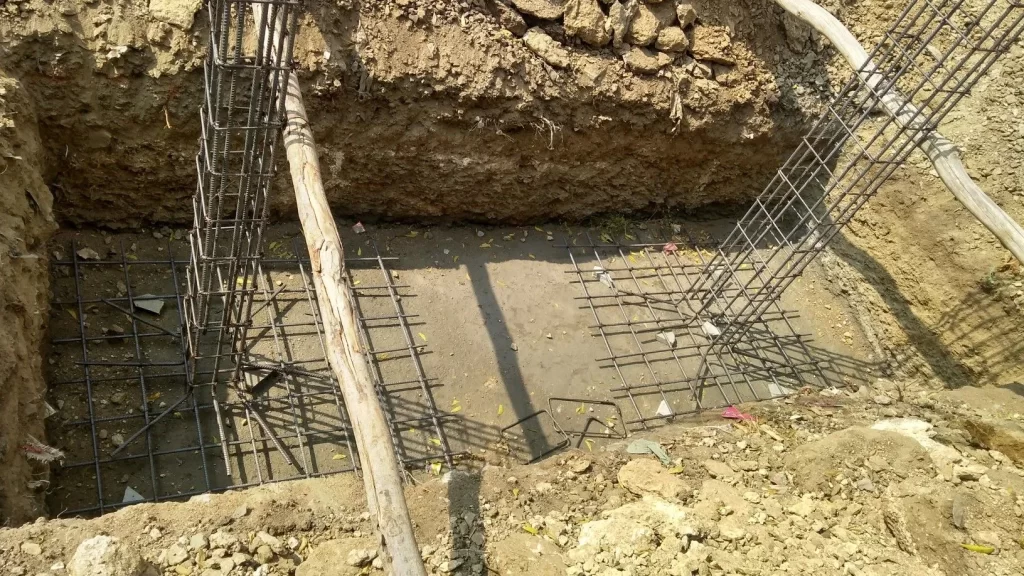
Pros:
1. A combined footing foundation helps with load distribution when your structure columns are spaced close to each other, supporting multiple columns at the same time.
2. It offers better stability compared to isolated footings. This foundation option helps reduce the differential settlement problem.
3. For irregular load conditions, boundary restrictions, and limited soil bearing capacity areas, it is the most effective foundation.
Cons:
1. Some of its disadvantages are that it requires more material and labor, increasing the cost compared to single-column footings.
2. It has a more difficult and complex design compared to isolated footings.
3. It is vulnerable to structural cracking if the reinforcements are not done with detail.
General Cost: You can expect the cost of this foundation to be anywhere between $5 and $7 per square foot. This is for basic concrete and labor. The cost for a square foot overall can reach about 49 dollars, and more, depending upon type and complexity.
- Grade Beam Foundation: In a grade beam foundation, a reinforced, horizontal concrete beam is used that spans between piles or cassion to support heavy, load-bearing walls or columns. The concrete beam is usually placed at or above the ground level, which helps distribute the building’s weight and load evenly to the ground or to support the underground piers or pilings. This is different from your regular footing; it doesn’t distribute the load directly into the soil but loads into deep foundations such as piles, caissons, or across poor soil areas. So, in short, it sits near, or near the ground level, to distribute weight.
This type of foundation is more useful when your project’s soil conditions are very weak. So, if you are going forward with building high-rise buildings on weak, unstable, or expansive soils, this will work out. Many bridges, overpasses, industrial facilities, or buildings where spread footing is not possible utilize this foundation.
Pros:
1. One of the reasons it is used is that it offers better stability and resistance to soil movement, providing strong support to weak or unstable soil.
2. If you are working on areas where the ground is slopy or uneven, the design of this foundation can be effective for your structure.
3. It helps reduce any uneven settlement issues by connecting multiple footing elements with each other.
Cons:
1. It is not considered the best option for small, lightweight structures and is not able to support a basement.
2. It is more vulnerable to moisture problems, water damage, and compared to a shallow foundation, it is more expensive.
3. It requires very precise and detailed reinforcement, which ultimately increases the demand for skilled labor and workforce.
General Cost: The general cost for grade beam foundation in 2025 is approximately $6 to $12 per square foot. Sometimes, people confuse grade beam foundation with pier and beam foundation. Both are different, but the main thing that separates them is that a pier and beam doesn’t require a grade beam for its foundation, but some may utilize it.
- Types of Deep Foundation: On the other hand, a deep foundation goes much deeper or further into your ground. Unlike shallow foundations, the structure’s load is transferred to a much deeper part of the soil or rock strata. It would be better to say that we go where more stable soil layers appear. This typically can expand up to 10 meters or more. Deep foundations are used for structures and buildings when the surface soil is weak, unstable, compressible, or cannot support heavy loads. They are mostly used for their stability features, making them a perfect option for projects such as high-rise buildings, bridges, offshore platforms, infrastructure projects, and more.
- Pier and Beam Foundation: I would suggest using this foundation if your structure is located in such areas that are more vulnerable to flooding or if you have sloped or uneven terrain. A pier and beam foundation is a raised foundation system that utilizes vertical piers that help support horizontal beams. The concrete piers are placed with wooden or steel beams, which provide support.
This foundation structure holds up the building’s floor and provides a crawl space beneath your structure. They are mostly used for small homes, cabins, and lightweight structures where a level base and no large process of digging is required.
Pros:
1. It is mostly used as its design protects your structure from floods.
2. It provides you with enough crawl space, allowing you to access your MEP systems.
3. It adapts well to soil conditions. So, if you have a shifting or expansive soil, this type of foundation is for you.
Cons:
1. If you are using wood beams, issues such as rotting, molding, and termite damage can happen.
2. It is not the best choice if you want heavy and high-tall buildings.
3. The crawl space it offers can often trap humidity, for which ventilation systems or vapor barriers are required.
General Cost: The cost for a Pier and Beam foundation can range from $6 to $15 per square foot. The type of beams you are using, soil stabilization, reinforcing beams, and making piers deeper can also increase the cost.t
- Pile Foundation: A pile foundation is one of the types of deep foundation, which includes long, slender columns that are made up of materials such as steel, concrete, or timber. These long columns are also called piles, are driven or drilled directly into the ground. This helps transfer the structural load from the surface that has weak, compressible soil to deeper, stronger rock or strata. Its structure is designed to support heavy structures.
Do you know that about 60% of tall buildings use pile foundations for their projects in urban centers, as it works as the best solution for weak soils? This type of foundation has the ability to hold on to strong and heavy structures, making it the perfect option for skyscrapers, tall buildings, marine structures, bridges, flyovers, industrial projects, etc.
Pros:
1. It is effective for weak, compressible, loose, waterlogged, or unstable soils as it provides very high stability.
2. It is also highly durable against decay, corrosion and offers good load-bearing capacity.
3. Compared to shallow foundations, it helps reduce settlement, and it can also be used for wetlands or areas that have high water tables.
Cons:
1. It does have many advantages, but since more specialized equipment and a workforce are required, it is more expensive.
2. The installation and construction process leads to more vibration, noise pollution, and risks to the underground utilities.
3. One of the main disadvantages is that once it has been constructed, it is hard to inspect. Plus, it is hard to maintain.
General Cost: The cost of a pile foundation depends on the type of pile you require. For example, wood piles can cost you anywhere around $13 to $20 per linear foot, hollow steel piles can range from $20 to $40 per linear foot, and concrete piles, which are the most expensive, can cost somewhere between $30 $80 per linear foot. But the general cost of the piles ranges between $10 and $80 per square foot.
- Caisson Foundation (Drilled Shaft): In the US, about 30 to 40 percent of drilled deep foundations for projects such as towers and stadiums are caissons. In comparison to pile groups in soft soils, caissons can help reduce settlement by more than 55%, preventing any structural damage like cracks, tilting, and misalignment of components.
A caisson foundation, which is also popularly by name drilled shaft foundation, is another type of deep foundation that is designed by excavating or drilling large-diameter holes into your ground and filling them with reinforced concrete. The major difference between piles and caissons can be denoted by the diameter, as a caisson is larger in diameter and extends more deeply to reach the soil or rock layers.
Caisson foundation is known for handling heavy structures, which is why it is considered a good option for bridges, high-rise towers, piers, abutments, docks, wharves, other marine installations, and more.
Pros:
1. Due to its large cross-sectional area, it can easily carry and stabilize very heavy loads and structures.
2. Compared to a pile foundation, it doesn’t have as many vibration or noise-related problems.
3. It is more durable, more stable, perfect for watertight bases and large-scale projects. Additionally, it is more susceptible to buckling during the installation process.
Cons:
1. The construction process requires specialized equipment for drilling rigs, augers, drilling buckets, drill bits, etc.
2. There’s a shortage of skilled engineers and laborers for the caisson foundation project.
3. As the construction process requires skills, expertise, and time, the installation is slower compared to driven piles.
General Cost: The standard cost of caisson foundations per square foot ranges from $32 to $80, and more, depending upon the project size, soil type, diameter, and other factors. In marine or river projects, the costs of the foundation can also increase by about 20 to 40% due to extra processes such as dewatering, slurry, casing, and more.
- Hybrid Foundation: This type of foundation is a combination of both shallow and deep foundations; hence, it is named a hybrid foundation. In general, it integrates raft slabs with a pile-raft foundation. It may also incorporate grade beams with caissons/piles. But why do we do it? It is simple to enhance the performance of the foundation for your structure. This hybrid design helps minimize differential, uneven settlements, balances load distribution, and minimizes costs compared to using options like only piles or only a raft.
Research shows that more than 25% of high-rise and tall buildings worldwide that are above 40 stories utilize hybrid foundations. Its hybrid design enables multiple options. For example, it can then be used for high-rise buildings on changing soil conditions, coastal projects with soft clay and sandy layers, bridges, metro stations, and even nuclear plants.
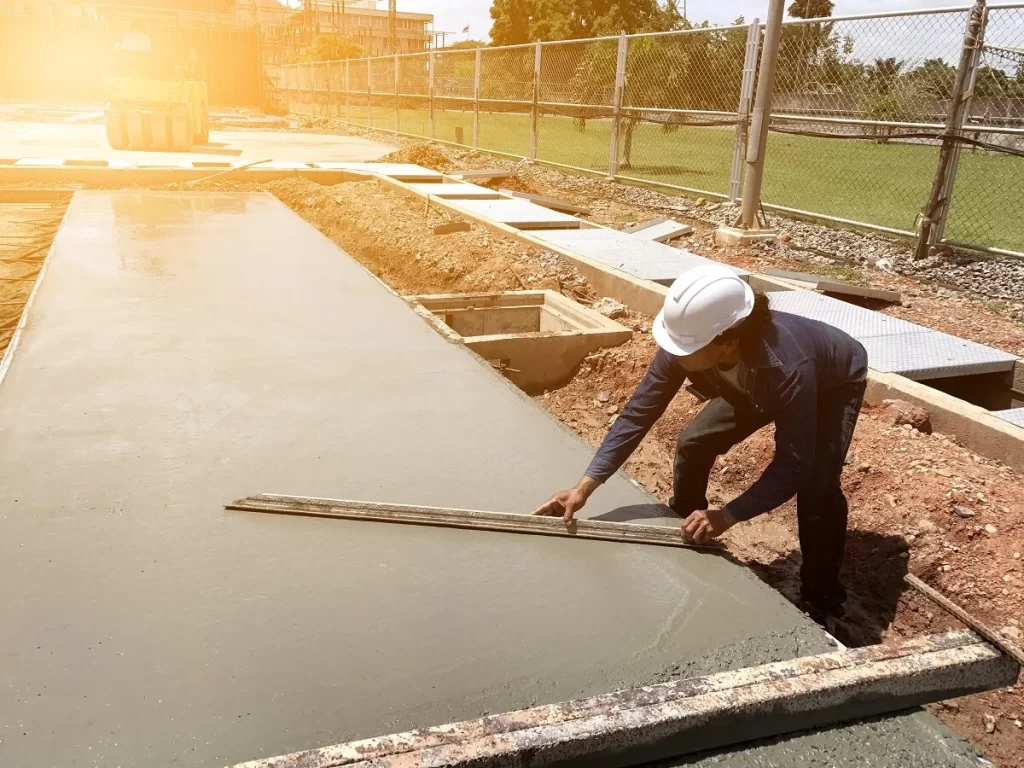
Pros:
1. Most foundations don’t work efficiently when soil conditions change depending on depth. Using this foundation can help address that problem.
2. A hybrid foundation is typically durable, flexible, efficient, and offers more stability than a raft foundation.
3. If you are going with a full pile foundation or something like that, using a hybrid foundation is a more cost-effective and budget-friendly option, as it also requires fewer piles.
Cons:
1. It has a more complex and difficult design. Additionally, you would require specialized equipment and skilled labor.
2. Compared to a raft foundation, a hybrid can have a higher cost at the initial stage of the construction process.
3. As it is a hybrid version, you would require a customized drainage and insulation system to ensure that everything integrates properly. Thus, it will also increase costs.
General Cost: Unlike other foundations, a hybrid foundation doesn’t have a fixed rate as it depends upon multiple factors, such as the mix, equipment used, labor, etc. For example, if you are using a concrete and fiber mix or a pile and raft mixture, which is actually the most common. Generally, a hybrid foundation would cost around $80 to $120 per square foot.
| Foundation type | Cost per sq foot | Cost per 1000 square feet | Cost per 2000 square feet |
| Concrete-Slab Foundation | Ranges from $4 to $16 | Ranges from $4,000 – $16,000 | Ranges from $8,000 – $32,000 |
| Crawl Space Foundation | Ranges from $6 to $18 | Ranges from $6,000 – $18,000 | Ranges from $12,000 – $36,000 |
| Basement Foundation | Ranges from $20 to $100 | Ranges from $20,000 – $100,000 | Ranges from $40,000 – $200,000 |
| Pad (Isolated) Footing | Ranges from $4 to $30 | Ranges from $4,000 – $30,000 | Ranges from $8,000 – $60,000 |
| Strip Footing | Ranges from $3 to $10 | Ranges from $3,000 – $10,000 | Ranges from $6,000 – $20,000 |
| Stem Wall Foundation | Ranges from $6 to $18 | Ranges from $6,000 – $18,000 | Ranges from $12,000 – $36,000 |
| Raft (Mat) Foundation | Ranges from $6 to $12 | Ranges from $6,000 – $12,000 | Ranges from $12,000 – $24,000 |
| Combined Foundation | Ranges from $5 to $7 | Ranges from $5,000 – $7,000 | Ranges from $10,000 – $14,000 |
| Grade Beam Foundation | Ranges from $6 to $12 | Ranges from $6,000 – $12,000 | Ranges from $12,000 – $24,000 |
| Pier and Beam Foundation | Ranges from $6 to $15 | Ranges from $6,000 – $15,000 | Ranges from $12,000 – $30,000 |
| Pile Foundation | Ranges from $10 to $80 | Ranges from $10,000 – $80,000 | Ranges from $20,000 – $160,000 |
| Caisson Foundation | Ranges from $32 to $80 | Ranges from $32,000 – $80,000 | Ranges from $64,000 – $160,000 |
| Hybrid Foundation | Ranges from $80 to $120 | Ranges from $80,000 – $120,000 | Ranges from $160,000 – $240,000 |
Factors Affecting the Cost of Foundation
We have now discussed all the main types of foundation, shallow and deep, in detail, along with their costs. But have you wondered what makes the costs go up and down? Well, the cost of the foundation can depend upon multiple factors. Understanding these factors is important as they help you define an effective budget that can help you with your construction project. So, let’s now discuss some factors that impact your foundation cost.
Soil Conditions: Soil, site, or location conditions are one of the major factors that affect your foundation cost. Your soil condition tells you what kind of foundation will work out best for you. For example, for unstable soil, foundations like a piled or raft-pile hybrid foundation will work out best for you. Additionally, whether you have expansive, unstable soil or rocky, sloped terrain, site preparation for the foundation will also cost you.
Labor: The labor cost, wages, and salaries also impact the foundation cost. Urban, rural areas, and other high-cost regions, almost all have different labor costs. The amount of workforce or the number of skilled laborers required for your project also matters.
Resources: Which material or resource is required for your project also matters. Like, foundations use various materials such as wood, steel, concrete, and more. Keeping this in mind, the amount of material required also increases the cost of a foundation. Specialized equipment required, such as excavators, bulldozers, backhoes, graders, loaders, forklifts, dump trucks, and other machinery, can also affect your budget.
Foundation Size and Design: The more complex the design of your foundation, the more effort and skilled labor are required. Vice versa, the larger your project in square feet, the bigger the foundation. Thus, increasing your foundation cost.
Maintenance & Reinforcements: If you are looking for waterproofing, electrical, plumbing, mechanical, drainage, or any other kind of systems, more effort will be required. Some people also add features such as insulation, pest control, and moisture protection, and also go for full basement finishings, which further puts an extra burden on your budget.
Conclusion
In this blog, we have now discussed everything in detail without missing out on anything. Whether you are looking for a foundation for the design-build construction of your residential, commercial, or large-scale projects, this can help you out.
FAQs
Does the foundation cost depend upon the region?
Yes, the cost of the foundation depends on your region. Every region can have different rates for the material, labor, and equipment required for your project.
What is the difference between full basement finishes and unfinished?
An unfinished basement is something where areas like living space, storage, insulation, and other systems are not used. It’s more of an unfinished, basic, and raw utility space.
Which foundation type is best for strong soils?
If you have a strong and stable soil, a shallow foundation is considered the best and budget-friendly option for such projects.