Whether you’re adding a garage, workshop, patio, or shed to your home, a concrete slab is the best foundation on which to work. It’s more than just a patch of pavement; it is what keeps your projects and vehicles grounded and safe from exposure over time.
In the U.S. For a 4-to-6-inch-thick standard concrete slab for most residential applications, it’s reasonable to pay about $2,400 to $4,000. However, the cost depends upon various factors such as equipment, labor, material, etc. Material costs depend on local supply, seasonal demand, delivery distance, and additional expenses such as curing additives. We’ll discuss all these factors further in detail.
This blog provides a detailed breakdown of slab, pad, and foundation costs, along with yardage formulas, finish options, and practical pricing examples. Since local bids differ, use these numbers as a baseline for comparison and focus on inclusions that deliver the best long-term value. So, let’s move ahead and examine the topic in depth.
Concrete slabs
Concrete slab is still the standard for ground-bearing floors as it offers cap compressive strength and predictable performance when detailed correctly. Builders like it for its longevity, low routine maintenance, and ability to take a wide range of finishes. Properly designed concrete takes these joints into account and maintains the concrete slabs, through joint placement, as a dense structure, with loads distributed evenly throughout.
The choice of the right panel is based on anticipated loads, quality of sub-ground, moisture conditions, and finish requirements. That choice in turn dictates the amount of material, degree of reinforcement, and quantity of labor and expense. The goal is to marry the slab design to the use case so that each and every dollar spent contributes to service life and reliability.
Types of concrete slabs (slab on grade, suspended slab, waffle slab)
Slab on grade: It is the most common residential form. It rests on a compacted subbase and is reinforced with welded wire reinforcement or rebar, then jointed to guide shrinkage cracks.
Suspended slabs: These are supported by beams or walls and are used where spans, basements, or site constraints require a structural deck.
Waffle slabs: They use a grid of ribs to reduce weight while maintaining stiffness and are most often specified in commercial structures that must carry heavier or more distributed loads.
Each type influences cost. Slab on grade is often the least expensive since it uses less formwork and no structural support. Suspended floor and waffle systems require more labor for formwork, shoring, and placement of reinforcement; they generally need higher-strength mixes with closer tolerances. They are project-dependent, so the right one is determined by the architectural and structural program.
Typical thicknesses and common uses (driveways, patios, garage floors)
Most residential slabs are four to six inches. Leveling of patios/pavers takes place at 4” above where foot traffic is light. Garage floors and driveways for light vehicles range from five to six inches and offer greater resistance to punctures in the slab when heavy vehicles drive over it. Heavy truck parking areas or equipment pads typically require about slabs 6 inches or more, sometimes reaching 8 inches or greater to process axle loads.
For additional load-bearing capacity, contractors often install a thicker, well-compacted, and reinforced base layer. This significantly improves the durability of the structure.
How slab design affects material and labor (reinforcement, wire mesh, rebar, control joints)
Design decisions shape costs directly. Welding is used for controlling crack widths and for better load transfer.
For patios and walkways, you’re more likely to see welded wire reinforcement, whereas a grid of deformed rebar is commonly used for garage floors and heavier installations. Control joints, spaced at certain intervals and depths, direct shrinkage to crack neatly where it is required. Edge thickening and dowels at transitions provide relief where slab edges intersect with other elements.
Every feature takes additional time and materials, but pays for itself with fewer callbacks, better serviceability, and greater overall life.
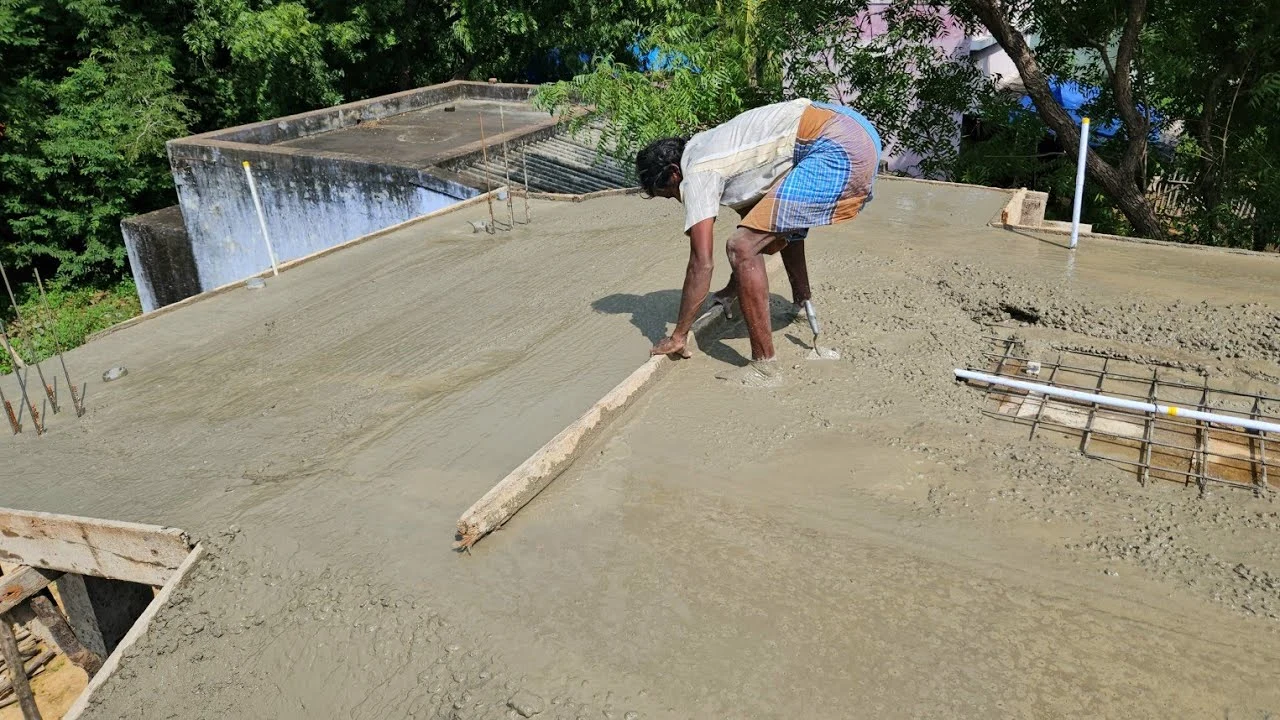
Example cost breakdown for a typical 10′×10′ slab (materials vs labor vs finishing)
A ten-by-ten slab at four inches requires approximately 1.24 cubic yards before overage. Adding five to ten percent accounts for waste and minor grade variations. A simple breakdown may look like this:
- Materials, including concrete, reinforcement, joint tooling, and curing compound: roughly 350 to 450 dollars
- Labor for forming, placing, finishing, and saw cutting: roughly 350 to 500 dollars
- Subbase preparation and form materials: roughly 150 to 250 dollars
- Optional sealer after curing: roughly 100 to 180 dollars
The total often falls between about 950 and 1,300 dollars for a clean, standard finish when access is easy and the weather is favorable.
Cost of Concrete Pad
A pad is a small, dedicated concrete slab sized to support a specific load, such as a condensing unit, a small shed, a generator, or a grill island. These are usually standalone pours that demand level subgrades, adequate drainage, and the same curing care as larger slabs. Because the footprint is modest, per-pad pricing is common for these scopes.
What is a concrete pad (equipment pads, AC pads, shed pads)
A typical equipment concrete pad supports mechanical equipment and protects it from soil moisture and settlement. For a shed pad, the objective is an even, durable base that stays true as loads change with storage. In all cases, formwork, compaction, and reinforcement choices determine whether the pad resists curling and settlement. Where freeze-thaw is relevant, drainage and vapor protection improve longevity.
Typical sizes and thicknesses (e.g., 4″ pad, 6″ pad)
Concrete Pads are commonly four inches for light equipment and six inches where point loads or dynamic loads warrant greater stiffness. Air-conditioning pads are often three to four feet square. Shed pads vary from six by eight to eight by ten feet.
If your soil is weak, the edges are likely to take impact during maintenance. It is better to add extra thickness or rebar around the perimeter to help keep the pad stable and aligned.
Per-pad vs per-yard pricing: when each applies
Since small pads rarely require a full truck, contractors may quote a per-pad figure that includes a short-load fee in the material allowance. When concrete pads are combined into a larger pour or scheduled alongside a main slab, pricing may be expressed by the yard since the ready-mix quantity justifies a standard delivery.
For homeowners collecting quotes, it is useful to ask how material, labor, and any short-load charges are being accounted for so comparisons can be made on the same basis.
Example estimate: 6′×8′ pad — materials and installation cost
A six-by-eight pad at four inches contains about 0.59 cubic yards before adding overage. Materials, including concrete, reinforcement, and curbing, often fall near 120 to 180 dollars, depending on local rates. Labor for forms, placement, and finish typically ranges from about 240 to 380 dollars. Allowing for subbase preparation and cleanup, a total between 400 and 650 dollars is common for a straightforward placement with a broom finish.
Because this is indeed a pad, the cost of the concrete pad is sensitive to minimum load fees and travel distances. Combining work scopes on the same day is a practical way to reduce those fixed charges.
Concrete slab foundation cost
A slab-on-grade foundation integrates the floor and the primary support for walls and partitions. It is designed for settlement control, moisture management, and insulation at the perimeter where required. Because more elements are combined in one system, the concrete slab foundation cost includes additional details not seen on a simple patio slab.
Difference between a structural slab foundation and a simple slab on grade
A structural concrete slab foundation may include thickened footings, more substantial reinforcement, and specific insulation requirements at the edge or beneath the slab, depending on the climate. It often supports load-bearing partitions and carries significant live loads.
While a simple slab on grade, by contrast, serves non-structural uses such as a patio and does not shoulder building loads. Design documentation will indicate whether the slab is acting as a foundation or simply as a surface.
Factors that increase foundation cost (soil prep, footings, vapor barrier, insulation, thicker sections)
Costs increase with excavation depth, base course thickness, and the inclusion of a vapor barrier and insulation layers. Thickened edges or interior strip footings require more concrete and reinforcement.
The layout may call for dowels and keyways at joints, moisture protection at penetrations, and sleeves for services. Each of these details adds security for the structure, and each of them adds line items to the budget.
The concrete slab foundation cost, therefore, reflects the full system rather than only the surface.
Regional and code considerations (frost lines, seismic zones)
Foundation design responds to frost depth, expansive soils, and seismic categories in addition to the building’s loads. Cold regions require footings below the frost line to prevent heave.
Seismic zones may call for closer reinforcement spacing, additional doweling at interfaces, and specific joint detailing to accommodate movement. Code compliance reviews and inspections are part of the process and must be included in budgets where applicable.
Example: cost range for a small residential slab foundation
A small residence or addition around one thousand square feet will often fall between six and twelve dollars per square foot nationally when the subgrade is cooperative and access is reasonable. That range yields a total of about six thousand to twelve thousand dollars for a straightforward placement with a standard finish and typical edge thickening. Local soil reports, geotechnical recommendations, and the specified thermal package will refine that estimate in a formal bid.
How much is a concrete slab
Homeowners frequently ask how much a concrete slab costs for a specific footprint. A disciplined way to estimate is to separate the material, labor, and extras. This method helps you compare proposals on an equal footing and shows where design decisions move the total.
Simple formula to estimate cost: (yardage × price per yard) + labor + extras
First, calculate volume. Multiply length by width by thickness in inches, then divide by 324 to convert to cubic yards. Add five to ten percent for overage.
Multiply that result by the regional rate for ready-mix to establish the material line. Add labor for subbase preparation, formwork, placement, finishing, and jointing.
Add any extras such as pump rental, colored hardeners, sealer, insulation, or vapor barrier. The sum yields a realistic planning figure that you can compare to formal quotations. Throughout your calculations, track the concrete price per yard because it sets the baseline for the overall result.
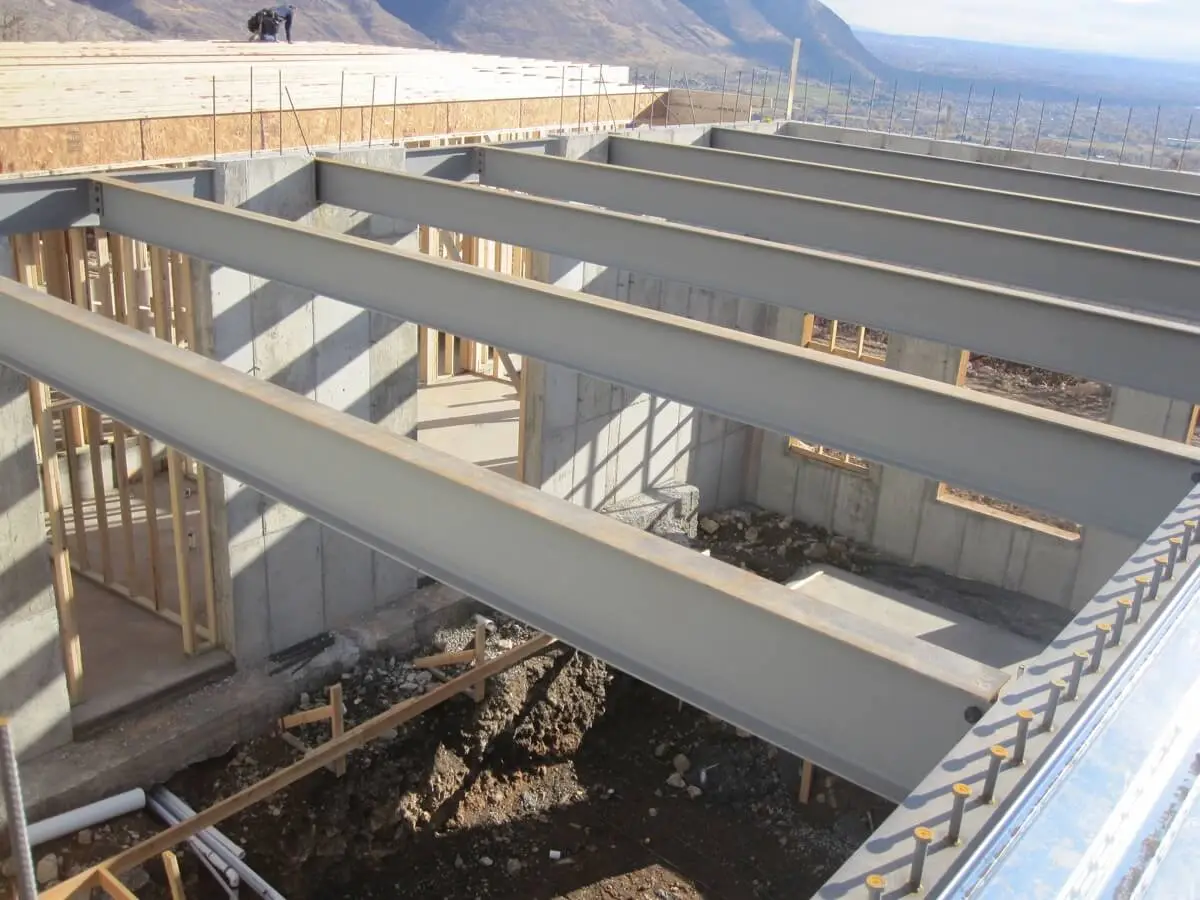
Common extras: excavation, compaction, forming, reinforcement, subbase, finishing, sealing
Excavation for uniform thickness and removal of unsuitable soils affects both schedule and cost. Compaction of a granular base with moisture conditioning is a quality item that pays back in performance. Forming straight, square edges with adequate stakes improves finish results. Reinforcement in the proper location controls crack widths and improves aggregate interlock. Finishing and sealer selections suit the use case: a garage might be broom finished; an interior space might be steel troweled and sealed after curing. Each decision influences the final number and the long-term service life.
Example calculations: 12′×20′ driveway at 4″ thick
A twelve-by-twenty driveway bay at four inches totals 240 square feet. Multiply by four inches to obtain 960. Divide by 324 to reach about 2.96 cubic yards. Add seven percent overage to plan for about 3.17 yards. Using a national mid-range assumption for the concrete price per yard, you have a material figure to which labor and extras are added. Where access is straightforward and the finish is a standard broom, the complete cost for that bay frequently falls near the four-figure mark.
Ways to lower costs without sacrificing quality
- Combine orders on the same day to spread fixed delivery charges across more volume.
- Keep layouts to full-dimension rectangles to reduce cut waste and to simplify forming.
- Use standard mixes unless a structural requirement or exposure condition justifies a specialty blend.
- Prioritize subbase compaction and jointing since both reduce callbacks and prevent structural issues such as cracking, settling, and erosion. Reducing maintenance cost.
- Categorize your document to fully understand the exact amount of materials, equipment, and other resources required. Helps avoid resource over-purchase or wastage.
- When comparing numbers, remember to keep your focus on how much a concrete slab is needed for your scope rather than on a single unit price. A clear scope description produces clearer pricing.
Concrete floor slab cost
The concrete floor slab cost varies with strength, reinforcement, flatness requirements, and the selected finish system. Interior floors in retail and light industrial spaces are often specified to tighter tolerances with additional joints and more rigorous curing protocols. Residential garages tend to accept a broom finish with standard flatness requirements. The gap between these use cases explains much of the range in national averages.
Commercial vs residential floor slab cost differences
Commercial floors generally demand higher compressive strength, closer reinforcement spacing, and stricter flatness and levelness metrics. The placement crew may use laser screeds, ride-on trowels, and extended finishing windows. Those measures add labor and equipment cost but deliver a surface suited to traffic, carts, and frequent cleaning.
Residential floors, by contrast, are typically placed to conventional tolerances and finished with a straightforward joint plan. The concrete floor slab cost therefore rises as the specification tightens.
Finish types and their cost impact (broom finish, polished, stained, sealed)
A broom finish provides traction and can disguise slight imperfections, so it’s a good choice for exterior slabs and drive lanes. The floors are further polished and ground using resin-based diamond pads to maintain a floor surface that is easy to keep clean in retail outlets. If architectural expression is important, pigments or dyes can be added for color and visual depth.
Benefits: Sealing pavers, locking out moisture and pollutants, and resealing during periodic maintenance cycles. There is different equipment, skill, and time for each finish, which is why you will see such a difference in the costs on proposals.
Under-slab services: vapor barrier, radiant heating, insulation — cost implications
When you care about interior comfort and performance, though, radiant tubing under the slab, continuous insulation, and high-performance vapor barriers are all good investments. They also enhance the comfort levels of occupants, lower energy consumption, and are designed to protect flooring systems from moisture. These are additional inclusions of both material and labour. Trade coordination is crucial to protect tubing and help joints and penetrations remain tight.
Example: cost comparison — basic garage floor vs polished showroom floor
A basic two-car garage at 400 square feet with a broom finish and standard jointing will generally fall near the center of the residential range. A showroom floor in the same area, specified for polishing and higher flatness, adds grinding, densification, and burnishing. The difference is not merely aesthetic; it is functional. The result is a harder, more uniform surface that tolerates traffic and cleaning routines well.
What affects the concrete price per yard (key cost drivers)
The concrete price per yard anchors the material portion of a slab budget. Prices shift with raw inputs, logistics, and demand cycles. Understanding these drivers helps you interpret bids and evaluate timing.
Material factors: cement/clinker price, admixtures, aggregate, slump, ready-mix vs site mix
Binder cost is influenced by cement and clinker markets. The delivered price is influenced by the availability and haul distance of aggregate. Workability, set control, air entrainment, and durability admixtures improve performance, and they may cost a few cents more per yard, respectively.
Defining a slump compatible with placement methods and weather minimizes rework and ensures the quality of the finish. The commonplace method in residential work is for the supply to be “ready-mix” because of its consistency and ease with which it can be placed. Concrete slab formers, other than site mix, are rare and used for special conditions.
Labor and equipment: local labor rates, crew size, pump vs chute, curing time
Labor rates vary by region. Crew size is tailored to pour size, truck spacing, and the selected finish. Pumps improve efficiency where access is limited or where long reaches are needed, although they add rental and operator charges. Curing requires time and protection.
It is not merely a waiting period; it is an active quality step that produces strength and reduces dusting. The schedule used to protect the concrete slab during curing should appear on the proposal because it affects the total time on site.
Site conditions and prep: access, excavation, soil type, dewatering, grading
Tight or steep access increases setup time and may require specialized equipment. Excavation to achieve uniform thickness and proper elevations contributes to both quality and cost. Cohesive or expansive soils call for a granular base and moisture conditioning to limit movement. Where groundwater or surface water is present, temporary dewatering or diversion prevents contamination of the mix and protects subbase density. Good preparation keeps pours uniform and finishing predictable.
Seasonal and regional fluctuations: supply chain, fuel, demand cycles
Warmer months bring more pours, which tightens scheduling and can lift prices. Cooler months ease schedules and may help secure better unit pricing. Fuel costs and regional supply chain adjustments affect delivery charges. A candid discussion about schedule flexibility can help a contractor place you into an efficient route, which lowers costs without reducing quality.
How to calculate yardage & quick formulas
Calculating volume accurately is essential for ordering and comparing proposals. It also prevents interruptions during placement.
Yardage formula (L × W × Thickness (in inches) ÷ 324) with worked examples
To get the area in square feet, multiply the length by the width. Area x Thickness in inches. To obtain cubic yards, divide by 324. 20 x 20 slab at 4inch is 400. Multiply by four and you get 1,600. He will convert this to about 4.94 yards after dividing by 324. If you add 5-10% for overage, your resulting total product need will be about 5.2 -5.5 yards, depending on how well the contractor trusts that subgrade and those edge forms!
Converting between cubic feet, cubic yards, and square footage
A cubic yard is the equivalent of twenty-seven cubic feet. 1 cu ft = 1728 cubic inches. To make an association between volume and coverage is easiest to recall the fact that one cubic yard spreads out to roughly eighty-one square feet at four inches. At six inches, that yard will cover about fifty-four square feet. These sorts of conversions come in useful when a plan set shows volumes in square feet and your ready-mix supplier’s prices are in yards.
Practical tips: always add 5–10% for waste/overage
Overage accounts for spillage, slight grade corrections, and edges that are thicker than nominal. Using a conservative allowance is wise for irregular shapes, for sites with tight access where repositioning forms is difficult, or for hot weather placements where workability windows are shorter. Ordering a touch extra is less expensive than paying for a stand-alone short-load to finish a corner.
Sample estimates & price table (region-agnostic examples)
Prices shown here are for the national context. Actual bids should always cite local labor rates, plant distance, short-load charges if applicable, and any admixture premiums. All examples assume a standard mix suitable for residential slabs and typical reinforcement selections.
Table: typical price per yard ranges (low / avg / high) — present as ranges, not exact fixed rates
- Rural and small-market averages: roughly one hundred twenty to one hundred forty dollars per yard
- Suburban averages: roughly one hundred forty to one hundred sixty dollars per yard
- Dense urban averages: roughly one hundred sixty to one hundred ninety dollars per yard
These tiers reflect transportation distances, plant capacity, and demand cycles. The concrete price per yard within any one metro can still vary with supplier competition and delivery timing.
Sample project estimates (driveway, patio, garage, slab foundation, commercial floor)
- Two hundred square feet patio at four inches with welded wire reinforcement and broom finish: often one thousand four hundred to two thousand two hundred dollars when access is straightforward
- Four hundred square foot driveway bay at five inches with rebar in wheel paths: commonly two thousand six hundred to three thousand nine hundred dollars, depending on jointing and access
- Four hundred square foot garage floor at five to six inches with saw-cut joints and curing: typically two thousand eight hundred to four thousand two hundred dollars
- One thousand square foot slab-on-grade foundation with thickened edges and vapor barrier: commonly six thousand to ten thousand dollars, depending on soils, inspection scope, and insulation
- Four hundred square feet of interior floor in a light-commercial setting, prepared for polishing: often three thousand two hundred to four thousand eight hundred dollars, owing to finish steps and tolerance requirements.
These examples frame expectations while leaving room for regional differences.
Notes on accuracy: how to get firm quotes
Provide drawings or at least measured sketches with thicknesses, joint plans, and any penetrations or recesses. Specify the finish, list reinforcement, and state whether a vapor barrier, insulation, or radiant tubing is included. Confirm whether curing, saw cutting, and sealing are part of the base scope. This documentation makes quotes comparable and ensures the concrete floor slab cost or the concrete slab foundation cost you are evaluating represents the same work content in each bid.
Ways to save on concrete costs (budgeting tips)
Design choices that reduce yardage and labor
Use rectangular modules aligned to whole-foot dimensions so forms can be reused and waste minimized. Avoid unnecessary thickness increases except where loads require them. Coordinate penetrations and conduit before forming begins to reduce late changes that create patching. Keep edge distances practical to limit specialized forming.
Scheduling & seasonal timing to reduce costs
Flexibility can secure better pricing. Placing orders during shoulder seasons or on days when plant schedules are lighter reduces delivery constraints. Booking pours early, let’s contractors combine your order with other stops on the route and pass on efficiencies. Weather windows that suit finishing and curing also decrease the risk of rework.
Reusing forms, optimizing slab thickness, and competitive bidding tips
Reusable forms improve alignment and reduce waste over multiple placements. Optimizing thickness to the actual load is more efficient than conservative over-specification. Secure at least three detailed bids and verify that each includes the same reinforcement, curing plan, and jointing. Ask for unit prices for items such as pump time or extended finishing so you can understand how schedule risks are priced.
When to get professional estimates (and what to ask)
Questions to ask contractors (mix design, admixtures, warranty, lead time)
Ask which mix design and strength they will use and why it suits your climate and load. Confirm whether air entrainment is included for exterior slabs exposed to freeze-thaw. Clarify admixtures proposed for set control, hydration, or workability. Request the curing plan. Review the warranty for cracks or scaling. Verify lead time, expected crew size, and daily schedule to understand how the pour will be sequenced.
Must-get items in the quote (materials list, labor breakdown, permits)
A complete proposal should list the ready-mix class, reinforcement type, and spacing, vapor barrier and insulation specifications if included, formwork, saw cutting, and sealer. The labor section should describe subbase preparation and cleanup. The document should note whether permits, inspections, and testing are included or handled by others. A transparent quote protects both parties and makes it easier to compare bidders.
How to compare bids fairly (unit price vs lump sum, exclusions)
Ask each bidder to summarize material quantities and unit prices in addition to the lump sum. Review exclusions such as unsuitable soil removal, dewatering, and pump rental. Ensure the joint plan, curing plan, and finish are the same across proposals. Only then can you compare the concrete floor slab cost or the concrete slab foundation cost fairly and select based on value rather than only on headline price.
FAQs
How many square feet does one yard of concrete cover?
At four inches in thickness, one cubic yard covers about eighty-one square feet. At six inches in thickness, the coverage is about fifty-four square feet. These conversions help you validate orders, especially when a drawing lists square footage but your supplier prices by the yard. They also help you translate the concrete price per yard into a per-square-foot perspective for quick budgeting and bid comparisons.
Is concrete priced per yard or per square foot?
Ready-mix suppliers quote by the cubic yard because concrete is a volumetric product. Installers frequently present bids on a per-square-foot basis since that format includes labor, subbase preparation, forming, finishing, jointing, and cleanup. For decision making, convert both to the same basis, verify the yardage, and check that each bid uses the same assumptions. Doing so keeps the concrete price per yard aligned with the total you will actually pay for the completed slab.
Do contractors include delivery and pumping in the price per yard?
Delivery within a defined radius is often included in a standard quote, yet short-loads, extended waits, night pours, or long distances can add charges. Pumping is typically an additional line item because it depends on reach, setup time, and operator hours. Always ask whether delivery time, fuel surcharges, and pump time are included in the proposal. This transparency prevents surprises and clarifies how the concrete price per yard relates to your all-in number.
Does a thicker slab cost proportionally more?
Increasing thickness increases volume directly, so the material line grows in proportion. Labor may rise modestly for placement and finishing because the crew handles more concrete, and joints may be adjusted. Reinforcement may also change, especially at edges or under wheel paths. The result is that costs increase more than linearly when thickness drives additional details. When you ask how much is a concrete slab of a given thickness costs, request itemized reinforcement and jointing so you can see the full effect.
Can I order exactly the number of yards I need?
Ordering the exact mathematical volume risks running short due to spillage, irregular subgrades, and the common tendency for edges to be slightly thicker than nominal. Suppliers and installers typically recommend adding five to ten percent as overage. It is less expensive to return a small quantity on the truck than to schedule a second short-load. When discussing the concrete price per yard, confirm how overage will be handled and who makes the final call on the site.
How does reinforcement (rebar) affect cost?
Reinforcement primarily controls crack widths and maintains load transfer across joints. Welded wire reinforcement suits lighter applications; deformed rebar placed in a grid is common for garage floors and driveways. Material costs for steel are modest on small projects, but tying, chairs, and placement checks add labor. The overall effect is a better-behaved slab that resists curl and remains serviceable. On a total-project basis, this modest premium is often justified by performance and reduced maintenance.
Conclusion & CTA
Quick summary of how to estimate and what affects the price
To estimate a 20×20 slab, calculate yardage with the length by width by thickness method, divide by 324, and add five to ten percent for overage.
Multiply by a national mid-range assumption to approximate the concrete price per yard.
Add labor for subbase preparation, forming, placing, finishing, jointing, and curing. Include optional items such as vapor barrier, insulation, reinforcement, and sealer.
Verify site access, schedule, and weather windows. When you evaluate the concrete floor slab cost for a garage or the concrete slab foundation cost for a structural pour, ensure each proposal lists the same work content. That is the clearest route to a durable result, an efficient schedule, and a fair total for the scope you need.